
Do I need a boilerplate, or can I just vibe-code my SaaS in 2026?
AI can write your auth flow, your Stripe integration, and your blog. But should it? The honest case for using a boilerplate even in an era when Claude Code can scaffold anything.

JavaScript has an npm problem. 36 months of supply chain receipts: chalk, debug, Solana, Polyfill, Next.js auth bypass, TanStack. An honest, sourced look at the damage and why Go's architecture is structurally safer.
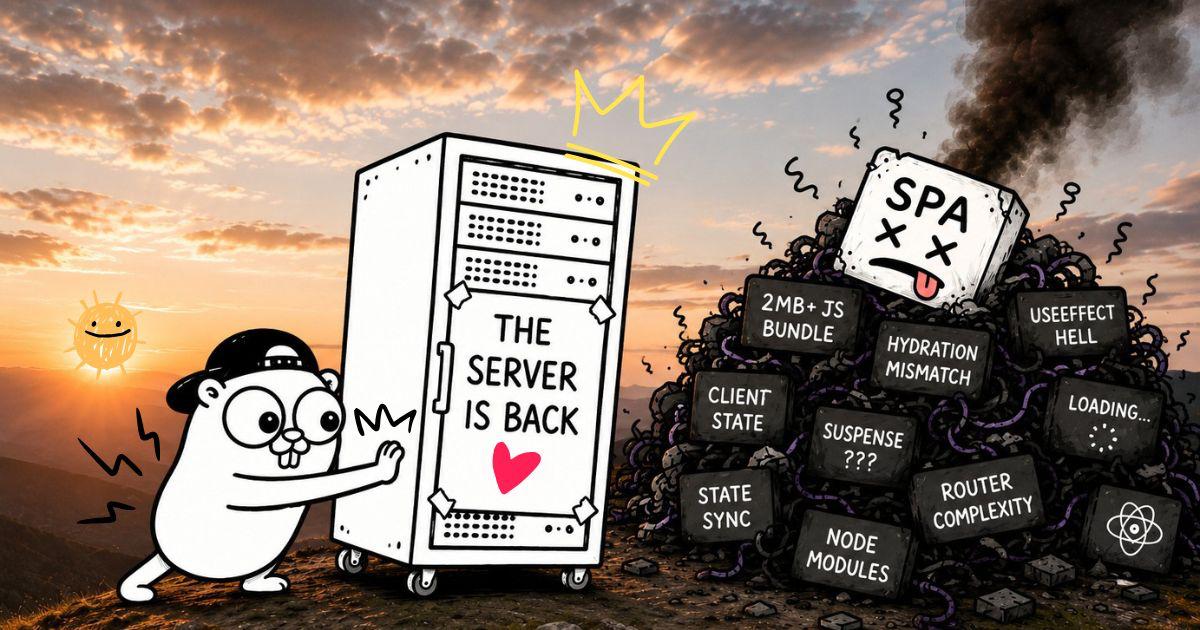
A manifesto. How the web used to work, why we threw it away for ten years, and why server-rendered HTML with HTMX is the right default in 2026. State on the server, simple beats clever, the old web was right all along.

Every piece of the modern Go SaaS stack, picked and justified. Web framework, templates, frontend, database, ORM, auth, payments, deployment, observability. The full reference, opinionated.

An itemized, honest accounting of the time a real SaaS boilerplate saves you. Auth, payments, email, SEO, legal, ops. Hour by hour, with the math, not the marketing.

The story behind goilerplate and templUI. How a Go developer escaped the JavaScript framework treadmill, built an open-source UI library, and turned the stack into a boilerplate that ships.

A side-by-side comparison of goilerplate, supastarter, and ShipFast. Stack, price, hosting cost, and which SaaS boilerplate is right for your next launch.

How to migrate an existing Next.js SaaS to a Go stack with templ and HTMX. Step by step, what to port first, common gotchas, and how to avoid downtime.

An honest 2026 comparison of the three big payment providers. Fees, tax handling, developer experience, payout reliability, the new Stripe Managed Payment option, and which one fits your stage. From the founder of goilerplate, which ships both Polar and Stripe.
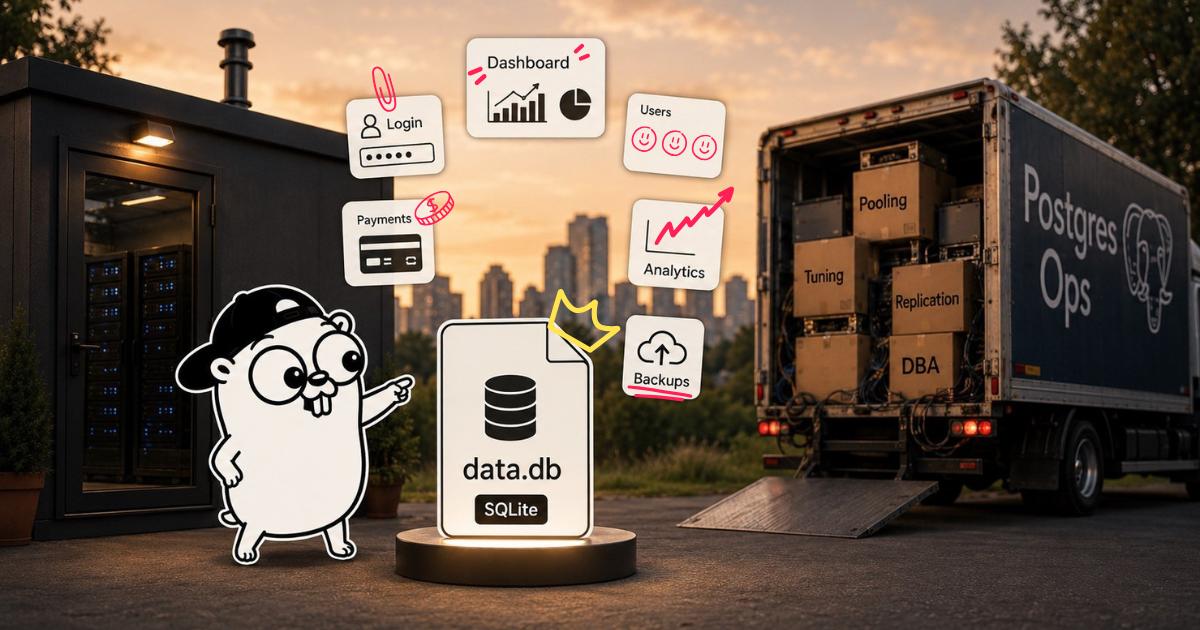
A practical, opinionated comparison. Why SQLite is the right default for almost every web app in 2026, the rare cases where Postgres is genuinely needed, and how to migrate when you actually outgrow SQLite. From the founder of goilerplate.